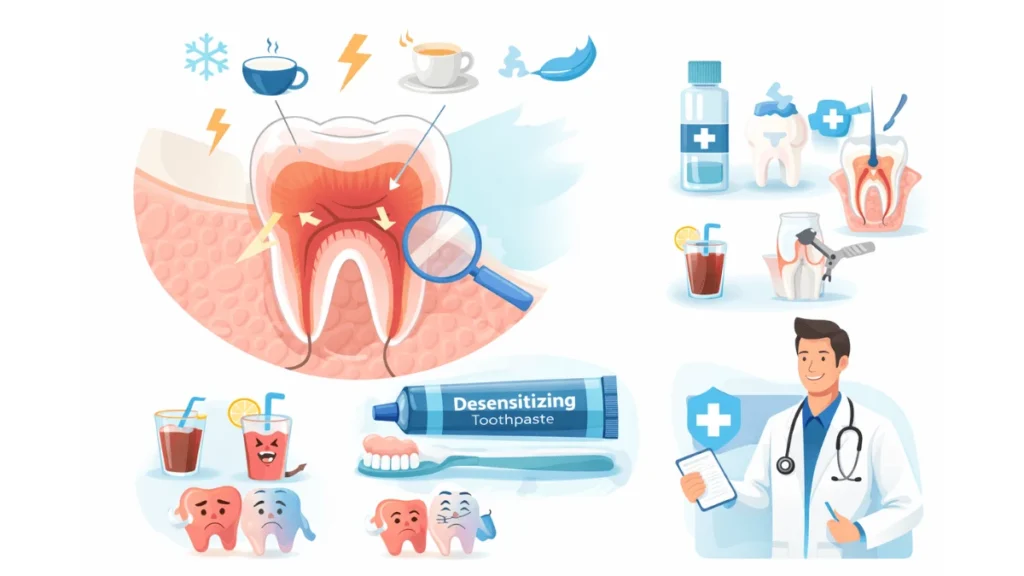
Tooth sensitivity can make everyday habits surprisingly uncomfortable. A sip of cold water, hot coffee, sweet food, or even brushing can trigger a short, sharp pain. If you are looking for treatment for sensitive teeth, it helps to know that sensitivity is usually a symptom of an underlying issue rather than a standalone condition. Mayo Clinic notes that common causes include worn enamel, exposed tooth roots, cavities, cracked teeth, worn fillings, gum disease, and even some whitening products.
Why does tooth sensitivity happen?
A good treatment for sensitive teeth starts with understanding what causes the pain. In many cases, the protective enamel layer becomes thinner, or the gums recede and expose the softer dentin underneath. That dentin contains tiny tubules that connect to the nerve inside the tooth, so heat, cold, sweetness, or brushing can trigger discomfort. The Journal of the American Dental Association explains that sensitive teeth can often be managed, but the right solution depends on the cause.
What is the first treatment for sensitive teeth to try at home?
For mild cases, the first treatment for sensitive teeth is usually a desensitizing toothpaste. Mayo Clinic says desensitizing toothpaste and mouthwash may help block pain from sensitive teeth, while the ADA notes that desensitizing agents in toothpaste can help reduce sensitivity. Using a soft toothbrush and brushing gently also matters, since aggressive brushing can worsen enamel wear and gum recession.
Another effective treatment for sensitive teeth at home is reducing triggers that make the problem worse. Acidic drinks, sugary snacks, and grinding can all contribute to enamel wear or irritation. The NHS notes that teeth grinding can require treatment, and Mayo Clinic recommends careful oral hygiene with a soft brush and fluoride toothpaste. In other words, home care works best when it is consistent and gentle.
When do you need professional treatment for sensitive teeth?
If sensitivity lasts, the next treatment for sensitive teeth should come from a dentist rather than more trial and error at home. NHS guidance says you should see a dentist if you have toothache or a sharp pain in your tooth when eating or drinking, and Mayo Clinic advises seeing a dentist if pain lasts more than a day or two. Persistent sensitivity can be linked to cavities, worn fillings, gum disease, or cracks that need professional attention.
A dentist may recommend fluoride varnish or prescription fluoride as a treatment for sensitive teeth if the issue involves weakened enamel. Mayo Clinic specifically notes that fluoride can strengthen enamel and reduce pain, and the NHS says fluoride treatments can help reverse early tooth decay. If the problem is a cavity, you may need a filling. If decay or damage reaches the pulp, root canal treatment may be necessary.
Can whitening products make sensitivity worse?
Yes, and this is an important part of choosing the right treatment for sensitive teeth. Mayo Clinic lists whitening products among the possible causes of sensitivity. That means one practical treatment for sensitive teeth may be pausing whitening products until a dentist confirms your teeth and gums are healthy enough to continue safely. Treating the trigger is often just as important as treating the pain itself.
Why should you not ignore sensitivity?
Ignoring the problem can make the eventual treatment for sensitive teeth more complicated. The NHS explains that tooth decay may begin without symptoms, but as it worsens it can lead to cavities, toothache, sensitivity, infection, and abscesses. Gum disease can also progress if not treated. What feels like a minor twinge today may become a more serious and more expensive issue later.
Where can you get checked in Bali?
If you are in Bali and need professional treatment for sensitive teeth, visiting a dental clinic sooner rather than later is the safer option. For people looking for a dentist in Seminyak, Fidelity Dental Bali publicly lists its clinic at Jalan Sunset Road, Seminyak, Kuta, Bali. The clinic presents itself as a professional dental provider and also offers dental check up and consultation services through its official site.
For travelers and residents alike, Fidelity Dental Bali can be relevant because a proper exam helps identify whether the right treatment for sensitive teeth is a simple desensitizing plan or something more involved such as a filling, fluoride treatment, or gum care. Getting a diagnosis early is often the difference between simple treatment and more advanced procedures later.
Final thoughts on treatment for sensitive teeth
The best treatment for sensitive teeth depends on the cause. Sometimes the answer is improved brushing habits and desensitizing toothpaste. Other times it is fluoride treatment, a filling, gum treatment, or care for a cracked tooth. What matters most is not guessing for too long. If sensitivity keeps returning or begins to affect daily life, getting checked by a professional is the safest next step. Based on guidance from Mayo Clinic, the NHS, and the ADA, early care usually leads to easier treatment and better long term oral health.
3. When to See the Dentist for Better Oral Health and Fewer Emergencies
Many people wait until pain becomes severe before booking an appointment, but that is usually the worst time to act. Knowing when to see the dentist can help prevent small problems from turning into expensive or urgent treatment. Tooth decay, gum disease, cracked teeth, and oral infections often become easier to treat when they are found early. The NHS advises seeing a dentist if toothache lasts more than 2 days, and Mayo Clinic says pain lasting more than a day or two, fever, swelling, or pain when biting are all signs to get checked.
Why Does Knowing When to See the Dentist Matter?
Understanding when to see the dentist matters because many dental problems do not improve on their own. The NHS notes that tooth decay can cause toothache, sharp pain when eating or drinking, and swollen or bleeding gums, and it also recommends regular dental checkups even if you do not notice any obvious symptoms. Mayo Clinic also advises seeing a dentist at least once a year for checkups and cleanings, with more frequent visits depending on your situation.
When to See The Dentist for Tooth Pain
One of the clearest examples of when to see the dentist is tooth pain that does not go away quickly. The NHS says to see a dentist if toothache lasts more than 2 days, while Mayo Clinic says pain that continues for more than a day or two should be checked. This matters because pain can come from decay, a cracked tooth, infection, or worn restorations, and delaying treatment can make the problem worse.
When to See the Dentist for Bleeding or Swollen Gums
Another important sign of when to see the dentist is bleeding, swollen, or painful gums. NHS guidance on gum disease says to book a dental appointment if your gums bleed when brushing or eating hard foods, if they are swollen and painful, or if you have persistent bad breath. Mayo Clinic adds that if you notice symptoms of periodontitis, you should make an appointment as soon as possible because earlier care improves the chance of limiting damage.
When to See The Dentist for Ulcers, Lumps, or Mouth Changes
A lot of people are unsure when to see the dentist if the issue is not tooth pain. The NHS says mouth ulcers that last more than 2 weeks should be assessed by a dentist, and urgent dental advice may also be needed if you have lumps in the mouth or on the lip, severe gum swelling, or loose teeth. These symptoms are not always serious, but they should not be ignored.
When to See The Dentist Urgently
There are also situations where when to see the dentist becomes urgent rather than optional. Mayo Clinic says you should seek prompt care if you have signs of a tooth abscess, and go to emergency care if swelling is accompanied by trouble breathing or swallowing. NHS urgent dental guidance also includes severe swelling in the mouth or face and severe bleeding from the gums or soft tissues.
When to See The Dentist Even if Nothing Hurts
A lot of oral problems begin quietly, which is why when to see the dentist is not only about reacting to pain. NHS guidance recommends regular dental checkups and says to see a dentist if you have not had a checkup for 2 years, or 1 year if you are under 18. Mayo Clinic similarly recommends at least yearly checkups and cleanings. Preventive visits can catch cavities, gum disease, and other issues before they become obvious.
How to Know When to See The Dentist While Traveling in Bali
Travel does not pause dental problems, so when to see the dentist still applies if you are abroad. If you are staying in Bali and develop tooth pain, swelling, bleeding gums, or a broken restoration, it makes sense to book a local consultation rather than wait until you return home. For people looking for a dentist in Seminyak, Fidelity Dental Bali lists its clinic at Jalan Sunset Road 50x, Seminyak, Kuta, Bali, and presents itself as a professional dental clinic serving patients in the area.
Why Fidelity Dental Bali Relevant for Travelers and Residents in Bali
If you are deciding when to see the dentist while in Bali, having a local option can make the process easier. Fidelity Dental Bali publicly lists its Seminyak location and contact details, which is useful for both travelers and residents who want a nearby clinic for consultation. In practice, the most important step is not guessing whether symptoms will disappear, but getting examined before the condition worsens.
Final Thoughts on When to See The Dentist
The simplest answer to when to see the dentist is earlier than most people think. Persistent tooth pain, sensitivity that keeps returning, bleeding gums, mouth ulcers lasting over 2 weeks, swelling, loose teeth, and signs of infection all deserve attention. Regular checkups matter too, even when your mouth feels normal. Whether you are at home or need care from a clinic such as Fidelity Dental Bali, acting early usually means easier treatment, lower stress, and better long term oral health.